Choosing the right material can determine whether an outdoor lounge chair feels inviting or becomes a maintenance problem. So, what are the best materials for outdoor lounge chairs? The answer depends on sunlight, rainfall, salt exposure, weight, comfort, and repair expectations. A chair beside a humid pool needs different protection from one on a dry balcony. Aluminum offers light handling and strong corrosion resistance, especially with a durable powder-coated finish. Teak provides natural oils and a warm grain, but it needs regular cleaning and may weather into a silver-gray surface. High-density polyethylene can resist moisture and support recycled-content designs, although its finish and structural quality vary widely.
Market evidence shows why material selection deserves attention. Grand View Research’s Outdoor Furniture Market Size, Share & Trends Analysis Report estimates continued growth in global outdoor furniture demand through 2030. The report identifies durability, weather resistance, and low maintenance as important purchasing factors. The U.S. Consumer Product Safety Commission also emphasizes stability and safe design in furniture, reminding buyers that material choice cannot replace sound construction. Meanwhile, Textile Exchange’s Materials Market Report tracks rising interest in recycled fibers, which may influence outdoor cushions and upholstery.
No material wins everywhere. That is the honest part. In my experience, a thick aluminum frame can feel reassuring, while poorly designed drainage can still leave cushions damp after one storm. We should also question sustainability claims. Recycled content, long service life, repairability, and end-of-life options all matter. This guide compares those practical details, helping readers choose chairs that remain comfortable, stable, and attractive beyond the first season.
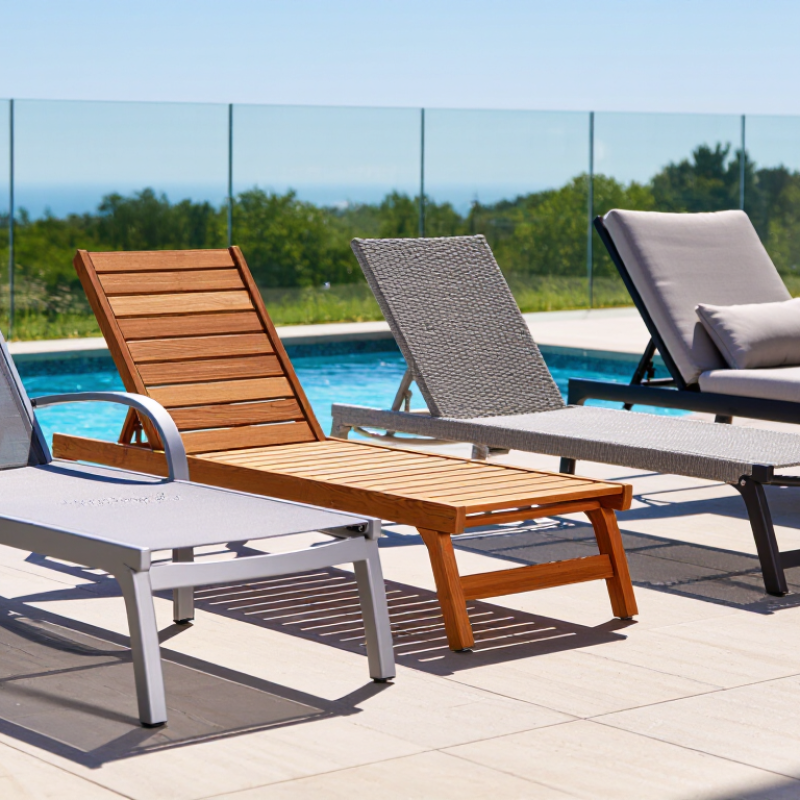
What Makes Outdoor Lounge Chair Materials Different from Indoor Options?
Outdoor lounge chair materials differ because they must survive changing weather, not just support comfortable sitting. Indoor furniture usually stays protected from sunlight, rain, humidity, and freezing temperatures. Outdoors, chairs face repeated wetting, drying, heating, and cooling. These cycles can loosen joints, fade surfaces, and weaken untreated fibers.
Durable outdoor frames often use corrosion-resistant metal, sealed hardwood, or weather-stable synthetic materials. Good designs also allow rainwater to drain instead of collecting beneath cushions. Outdoor fabrics usually resist ultraviolet light, mildew, and quick moisture absorption. However, “weather-resistant” does not mean maintenance-free. I have seen chairs with strong frames fail because water stayed trapped inside hollow sections. Small drainage holes matter more than many shoppers expect. Material thickness, fastener quality, and connection design deserve equal attention.
Tips: Press the frame gently and check for movement. Inspect welds, joints, and underside drainage points. Choose cushions with removable, breathable covers. After heavy rain, stand cushions upright so air can reach every surface. A shaded position can reduce fading, but it will not stop humidity damage. Some materials also feel hot under direct sun, while others become uncomfortable after cold nights. The practical choice depends on your climate, storage habits, and willingness to maintain the chair. Even careful buyers can overlook the underside. That is where trouble often begins.
How Weather Resistance Determines the Best Material Choices
Outdoor lounge chairs endure more than occasional showers. Rain enters joints, salt settles on fasteners, and sunlight weakens exposed surfaces. The U.S. Environmental Protection Agency reports that heavy precipitation increased 27% in the contiguous United States between 1958 and 2022. That shift matters. Furniture needs drainage, sealed connections, and materials that tolerate repeated wetting.
The NACE IMPACT study estimated global corrosion costs at 2.5 trillion dollars annually, equal to about 3.4% of global economic output. This supports careful material selection. Powder-coated aluminum offers low weight and strong resistance to moisture, but scratches can expose the metal beneath. Stainless steel performs well around coastal air, especially with suitable grades and regular cleaning. Small hardware choices matter.
For seating surfaces, solution-dyed outdoor fabric resists fading better than surface-printed cloth. High-density polyethylene also handles moisture without absorbing water like untreated wood. The USDA Forest Products Laboratory explains that wood repeatedly gains and loses moisture, creating swelling, shrinkage, and coating stress. Natural wood can still work beautifully, but it demands more maintenance. No material is maintenance-free. In practical inspections, neglected drainage often causes failure before the frame itself. That is easy to overlook. Asking for UV exposure results, corrosion testing, and care requirements creates a more reliable comparison than judging by appearance alone.
Which Materials Offer the Best Comfort, Strength, and Stability?
Outdoor lounge chairs must balance comfort, strength, and stability in changing weather. Aluminum frames stay light and resist rust, making them practical for patios or poolside areas. However, thin aluminum can flex under heavy use. A thicker frame with reinforced joints feels more dependable.
Teak offers natural strength and remains comfortable in warm sunlight. Its dense grain helps resist moisture, though regular cleaning preserves its surface. Recycled plastic lumber also handles rain well and avoids splintering. It can feel firm, so deep cushions become important. Steel provides excellent support, but it needs a durable protective finish to prevent corrosion.
The seat design matters as much as the material. A slightly reclined back, wide armrests, and flexible sling fabric can reduce pressure during long afternoons. Cushions should use quick-drying foam and breathable covers. Otherwise, trapped moisture may create odors or weaken the filling. Stability improves with a broad base, level feet, and evenly distributed weight. It feels solid.
I have found that visual heaviness can be misleading. A large chair may still wobble when its joints are weak. Bolted connections are easier to inspect and tighten than hidden fittings. Still, no material performs perfectly everywhere. Shade, drainage, maintenance, and user weight can change the result. A chair chosen only for appearance may disappoint after one wet season.
How Maintenance Needs Vary Across Outdoor Lounge Chair Materials
Outdoor lounge chairs face sunlight, rain, airborne dust, and sometimes salty coastal air. Their maintenance needs vary more than their appearance suggests. In my experience, powder-coated aluminum is relatively forgiving. A soft cloth, mild soap, and clean water usually remove surface grime. Check small coating chips, though. Moisture can reach the metal underneath and encourage corrosion. Stainless steel resists rust well, but salt deposits still require regular rinsing.
Teak brings warmth and strength, yet it needs a different routine. Brush away dirt from the grain and let the wood dry fully after washing. Some owners apply oil too often, which may attract grime and create uneven color. Natural silvering is not necessarily damage. Synthetic wicker needs gentle cleaning because aggressive brushes can loosen or break its woven strands. I once used too much water on a tightly woven chair and missed the dampness beneath the seat. That hidden moisture later created an unpleasant odor.
Cushions often need more attention than the chair frames. Remove covers when possible, wash them according to their care instructions, and dry every layer completely. Quick-drying foam helps, but it is not magic. HDPE or recycled plastic frames usually need only soap and water, although dark colors can become hot under direct sun. A breathable cover can reduce fading, but sealed covers may trap condensation. Inspect fasteners, joints, and drainage points every few weeks, especially after storms. Small problems are easier to repair than neglected ones.
Conclusion
Choosing the right material is essential for creating outdoor lounge chairs that remain comfortable, attractive, and durable over time. Unlike indoor furniture, outdoor seating must withstand sunlight, rain, humidity, temperature changes, and wind. What are the best materials for outdoor lounge chairs? The answer depends on how well each option balances weather resistance, strength, stability, comfort, and maintenance. Materials that resist moisture, fading, rust, and warping are especially valuable in changing outdoor conditions.
The ideal choice also depends on the style of your space and the amount of care you are willing to provide. Some materials offer a naturally warm appearance and excellent comfort, while others provide lightweight construction, strong support, and easy cleaning. Cushions and finishes can further improve relaxation and protection, but they may require additional upkeep. By considering your local climate, available space, design preferences, and maintenance routine, you can select an outdoor lounge chair material that delivers lasting performance and everyday comfort.
 Hee Living
