Why Use a Lumbar Support Pillow in Your Office Chair?

Time:2026-10-07 Author:Henry
0%

A long workday can turn a supportive office chair into an uncomfortable workstation. Your lower back may press against an empty gap. Your shoulders may drift forward. Small posture changes can become tiring after several hours.

Why should I use a lumbar support pillow in my office chair? A well-shaped pillow can fill that gap and support the natural inward curve of your lower spine. It may help you sit with a more balanced posture, especially when your chair’s built-in support feels too low, too firm, or poorly positioned. The effect is practical. Your pelvis stays steadier, your back receives more consistent contact, and reaching for your keyboard may feel less strained.

Fit matters more than appearance. A pillow should support your waist without pushing your chest forward. Place it around your belt line, then adjust it while sitting normally. A breathable cover can reduce heat during long meetings. Memory foam may feel supportive, but it can feel too rigid for some users. Not every pillow works for every body.

It is not a perfect fix. Regular movement, a suitable desk height, and short standing breaks still matter. Persistent or worsening pain deserves advice from a qualified healthcare professional. Ergonomic guidance can inform your choice, but personal comfort remains important. Try the pillow for several work sessions, observe your posture, and make small adjustments. Your best setup may require a little patience.
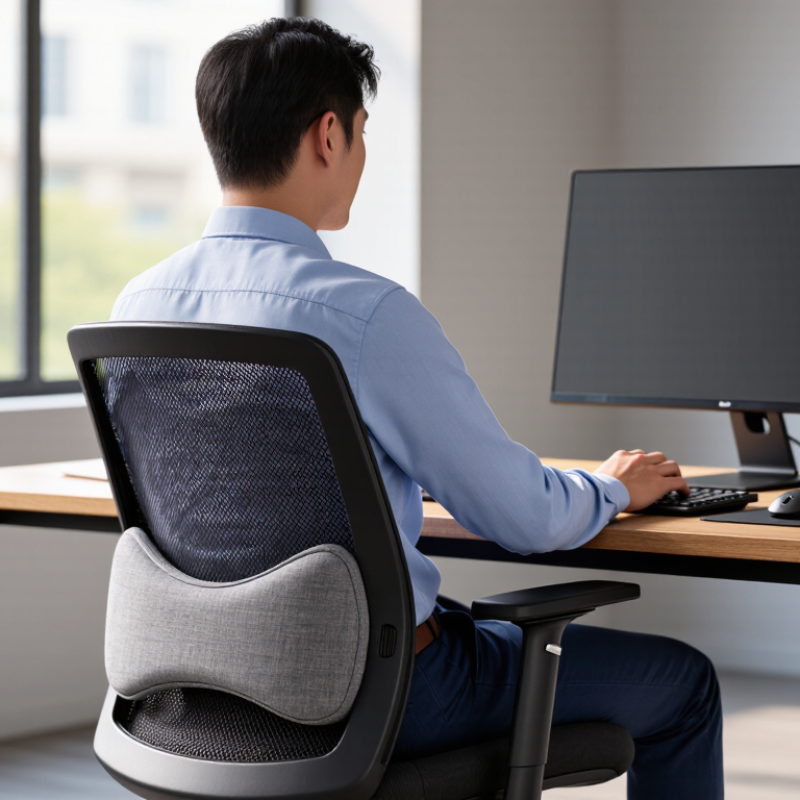
Why Use a Lumbar Support Pillow in Your Office Chair?

What Is a Lumbar Support Pillow?

A lumbar support pillow is a small cushion designed to support the lower curve of your spine. It usually rests between your lower back and the office chair. Its shape helps fill the empty space behind your waist. This can reduce slouching during long periods of sitting.

Most lumbar pillows use foam, fiber, or another resilient material. A useful pillow should feel supportive without pressing sharply into your back. Adjustable straps can keep it from sliding when you stand or shift position. The lower edge should sit near your belt line, not against your shoulder blades. Small details matter.

Try it gradually.

During my own desk work, I noticed that a firm cushion encouraged a more upright posture. However, it also felt uncomfortable when placed too high. That experience reflects an important limitation: a lumbar pillow cannot correct every seating problem. Chair height, foot position, screen level, and regular movement still influence back comfort. People with persistent pain, numbness, or weakness should seek advice from a qualified healthcare professional. A pillow is a support tool, not a medical treatment. Its effectiveness depends on fit, body shape, and how long you remain seated. Testing different positions for several minutes can reveal whether the pressure feels helpful or irritating.

How Lumbar Support Pillows Improve Sitting Posture

Why Use a Lumbar Support Pillow in Your Office Chair?

A lumbar support pillow can help your lower back keep its natural inward curve. This matters because prolonged sitting often encourages slouching, pelvic tilting, and rounded shoulders. The World Health Organization reports that low back pain affected 619 million people worldwide in 2020. That number could reach 843 million by 2050, according to its 2023 fact sheet. A pillow cannot prevent every case. It can, however, make a supportive sitting position easier to maintain.

Place the pillow at your belt-line, not between your shoulder blades. Your feet should rest flat, with knees close to hip height. Keep the screen near eye level, so your neck does not chase the monitor. In workplace assessments, ergonomic specialists often adjust the chair, desk, screen, and user together. A lumbar pillow works best as one small part of that setup. It may feel strange during the first hour. That discomfort deserves attention, not blind persistence. If pain increases, remove the pillow and seek qualified clinical advice. Evidence for lumbar supports is useful but not perfect; comfort and posture responses vary between people.

Tips: Test the pillow for 20 minutes. Check whether your shoulders relax. Change position every 30 to 60 minutes. The National Institute for Occupational Safety and Health emphasizes movement and adjustable workstations, not rigid postures. A folded towel can provide a temporary trial. It may also reveal that the pillow is too thick.

Key Benefits for Office Chair Users

Why Use a Lumbar Support Pillow in Your Office Chair?

Key Benefits for Office Chair Users

After several long desk sessions, I noticed my lower back tightening before lunchtime. A lumbar support pillow helped maintain the natural curve of my spine. It also reduced the urge to lean forward toward the screen. Small adjustment. Noticeable difference.

Proper lumbar support can improve sitting comfort during typing, reading, or video meetings. A well-shaped pillow fills the gap between your lower back and the chair. This may reduce muscle strain caused by slouching. It can also encourage a more balanced pelvis position. However, support should feel steady, not forceful. If it pushes your back forward, the pillow may be too thick.

Ergonomic specialists generally recommend adjusting the chair, desk, monitor, and foot position together. A pillow cannot correct every seating problem. Your feet should rest flat, while your knees remain roughly level with your hips. I initially focused only on the cushion and ignored my monitor height. That was a mistake. My neck still felt tired. The best result came after moving the screen and taking brief standing breaks. People with persistent pain, numbness, or weakness should seek advice from a qualified healthcare professional. Relaxed support matters.

Why Use a Lumbar Support Pillow in Your Office Chair? - Key Benefits for Office Chair Users
Benefit Area How Lumbar Support Helps What Users May Notice Practical Setup Guidance Evidence-Based Consideration
Lower-Back Posture Supports the natural inward curve of the lower spine while seated. Less slouching and a more upright sitting position. Place the pillow at the belt-line area, then adjust it until the lower back feels supported without being pushed forward. Potential benefit
Seated Comfort Adds cushioning between the lower back and a firm, flat, or poorly contoured chair back. Reduced pressure points and improved comfort during desk work. Choose a cushion that supports the back without creating excessive pressure or forcing the torso away from the chair. Individual response varies
Posture Awareness Provides a physical reminder to maintain contact with the chair back instead of gradually collapsing forward. Greater awareness of slouching during computer or reading tasks. Use the pillow together with regular posture changes rather than relying on it to hold the body in one fixed position. Useful behavioral cue
Chair Fit Can improve the fit of a chair when its built-in lumbar curve does not match the user’s lower-back shape. Better contact between the back and chair, with less need to lean forward. Select a removable support so its height, thickness, and position can be adjusted. Fit-dependent
Workday Fatigue May reduce the effort required to maintain a supported seated posture when combined with a properly adjusted workstation. Less feeling of lower-back tiredness for some users after prolonged desk work. Keep feet supported, shoulders relaxed, and the monitor positioned to avoid sustained neck bending. Not a stand-alone solution
Movement Support Helps maintain back contact while allowing normal small movements in the chair. More stable support during typing, reading, and video meetings. Use a flexible design when frequent reaching or position changes are part of the work routine. Best with movement
Adjustability Allows users to modify lumbar support independently of the chair’s fixed backrest. More personalized comfort than a non-adjustable chair back may provide. Adjust one variable at a time: height, thickness, and firmness. Stop if numbness, tingling, or increased pain occurs. Personalized benefit
Health Limitation A pillow can improve sitting comfort but cannot diagnose or treat a spinal condition. Persistent or worsening symptoms may remain despite improved chair support. Seek professional medical advice for severe pain, weakness, numbness, bowel or bladder changes, or symptoms that do not improve. Use with caution

How to Choose the Right Lumbar Support Pillow

Why Use a Lumbar Support Pillow in Your Office Chair?

Choosing the right lumbar support pillow matters more than choosing the softest one. The World Health Organization reported that low back pain affected 619 million people globally in 2020. That number may reach 843 million by 2050. Long desk hours can worsen discomfort when your chair leaves a gap behind the lower back.

Start with shape and adjustability. A pillow should fill the natural curve above your pelvis, not push your stomach forward. Look for a firm, supportive center with slightly softer edges. Measure your chair before buying. The pillow should fit between the backrest and your body without forcing your shoulders forward. Adjustable straps help keep it stable when you stand or lean.

Small details matter. Choose breathable fabric if your back feels warm after lunch. Check whether the cover can be removed and washed. A useful correction is this: thicker does not always mean better. Excessive depth can create pressure and encourage slouching. The Occupational Safety and Health Administration recommends a chair that supports the lower back and allows proper posture adjustment. Still, a pillow cannot repair poor desk height or constant sitting. Test it for several workdays, then reassess your comfort, hip position, and screen height. Some trial and error is normal.

Why Use a Lumbar Support Pillow in Your Office Chair?

A lumbar support pillow can help maintain the lower back’s natural curve, improve sitting comfort, and reduce slouching. The priority scores below are practical selection guidance rather than clinical ratings.

How to Choose the Right Lumbar Support Pillow

Choose a pillow with an adjustable position, a contoured shape that fills the gap between your lower back and the chair, and medium-firm support. Check that its thickness does not push your shoulders forward, and select breathable, washable materials for daily office use.

How to Position and Use It Correctly

Why Use a Lumbar Support Pillow in Your Office Chair?

How to Position and Use It Correctly

A lumbar support pillow can help maintain your lower back’s natural curve during desk work. It should support the space above your belt line, not push against your shoulders. Sit fully back, with your pelvis touching the chair’s backrest. Then place the pillow between your lower back and the chair. The thickest part should meet your lumbar curve gently.

Check your feet next. They should rest flat on the floor, with knees near hip level. If the pillow pushes your chest forward, it is probably too thick or too high. Move it down by two or three centimeters. Small changes matter. Your screen should remain near eye level, so you do not lean toward it.

I once positioned my pillow too high and felt more tension after an hour. That mistake taught me to adjust gradually. Start with ten minutes, then notice pressure, stiffness, or numbness. The support should feel steady, not rigid. Keep your shoulders relaxed, and avoid pressing your back forcefully into the cushion. Stand up regularly, because no pillow can replace movement. If discomfort continues or becomes sharp, stop using it and seek advice from a qualified healthcare professional. A chair setup can be improved, but it cannot correct every back problem.

FAQS

What is a lumbar support pillow?

It is a small cushion for the lower curve of your spine. It fills the gap between your waist and chair. Small support, noticeable difference.

Where should I place the pillow?

Place it just above your belt line. The thickest part should gently meet your lumbar curve. It should not reach your shoulder blades.

How should I sit with the pillow?

Sit fully back, with your pelvis touching the chair. Keep both feet flat on the floor. Your knees should stay near hip level.

What if the pillow feels too high?

Move it downward by two or three centimeters. A high position may increase tension after extended sitting. I learned this through an uncomfortable mistake.

How firm should the pillow feel?

It should feel supportive without sharp pressure. A firm cushion may encourage upright sitting. However, excessive firmness can become irritating.

Can a lumbar pillow fix every seating problem?

No, it cannot correct every seating issue. Chair height, foot placement, screen level, and movement still matter. The pillow is only one support tool.

How can I test whether it suits me?

Start by using it for ten minutes. Notice pressure, stiffness, or numbness. Adjust its position gradually. The fit may not feel perfect immediately.

When should I stop using the pillow?

Stop if discomfort becomes sharp or continues. Persistent pain, numbness, or weakness needs professional advice. Do not force your back against the cushion.

Conclusion

A lumbar support pillow is a cushion designed to fill the natural curve of your lower back while you sit. Why should I use a lumbar support pillow in my office chair? It can help maintain a more balanced sitting posture by supporting the spine, reducing slouching, and encouraging your shoulders and hips to stay properly aligned. For office chair users, this may improve comfort during long work sessions, reduce pressure on the lower back, and make it easier to maintain a healthy sitting position.

When choosing a lumbar support pillow, consider its firmness, shape, size, breathable materials, and whether it can be adjusted to suit your body and chair. To use it correctly, place it at the small of your back, around the natural inward curve above your waist. Sit back so the pillow supports you without pushing your body too far forward. Adjust its height and thickness as needed, and combine it with regular movement, stretching, and short breaks for better overall comfort.

Henry

Henry

Henry is a dedicated marketing professional with a profound expertise in the company's offerings. With years of experience in the industry, he possesses an impressive understanding of the market dynamics and consumer behaviors that drive success. Henry is committed to sharing his insights through......